

Life Events & Major Financial Transitions
Life Changes. Your Financial Plan Should Change With It.
Financial Plan Should Evolve with It.
Some financial transitions are exciting and anticipated. Others happen unexpectedly. Buying a home, changing careers, becoming an empty nester, ending a marriage, caring for family members, or losing someone you love can all create new questions and priorities.
Helping You Navigate What Changes
At The Snook Group, we help individuals and families understand how a major life event may affect different areas of their financial lives. By looking at what has changed, what may need attention now, and what can be addressed over time, we can help create a clearer path forward.
Important Areas of Life-Transition Planning


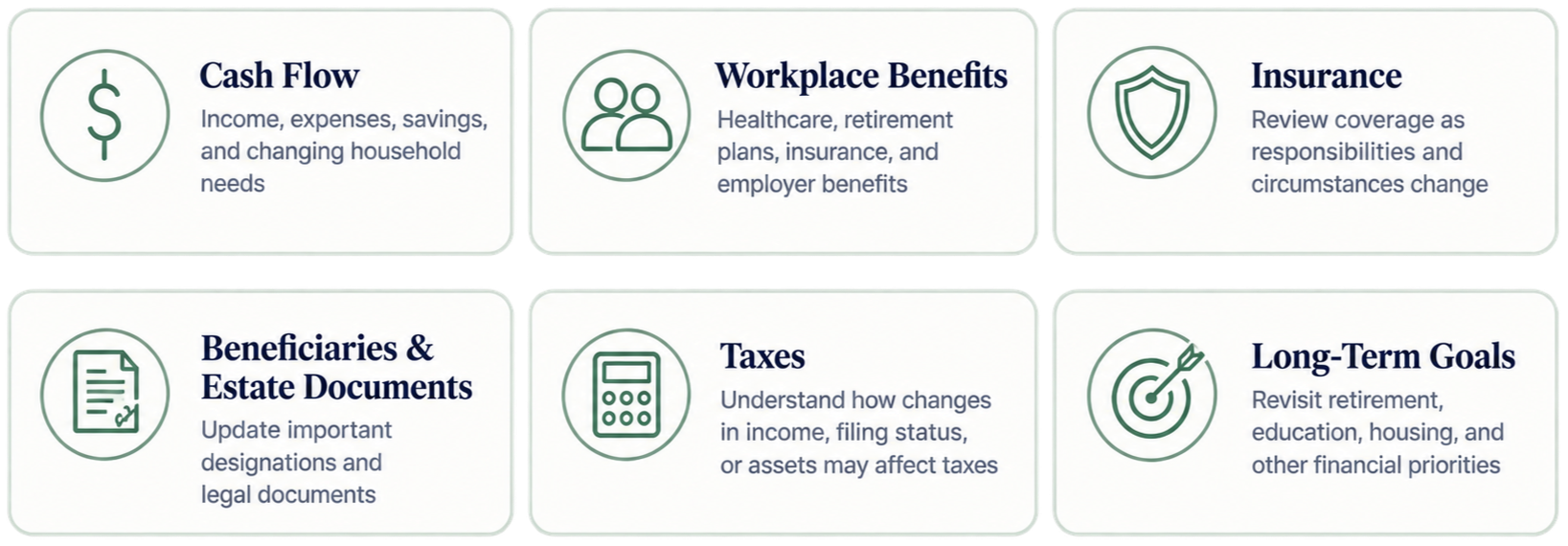
A Major Life Change Can Affect Several Areas of Your Financial Life
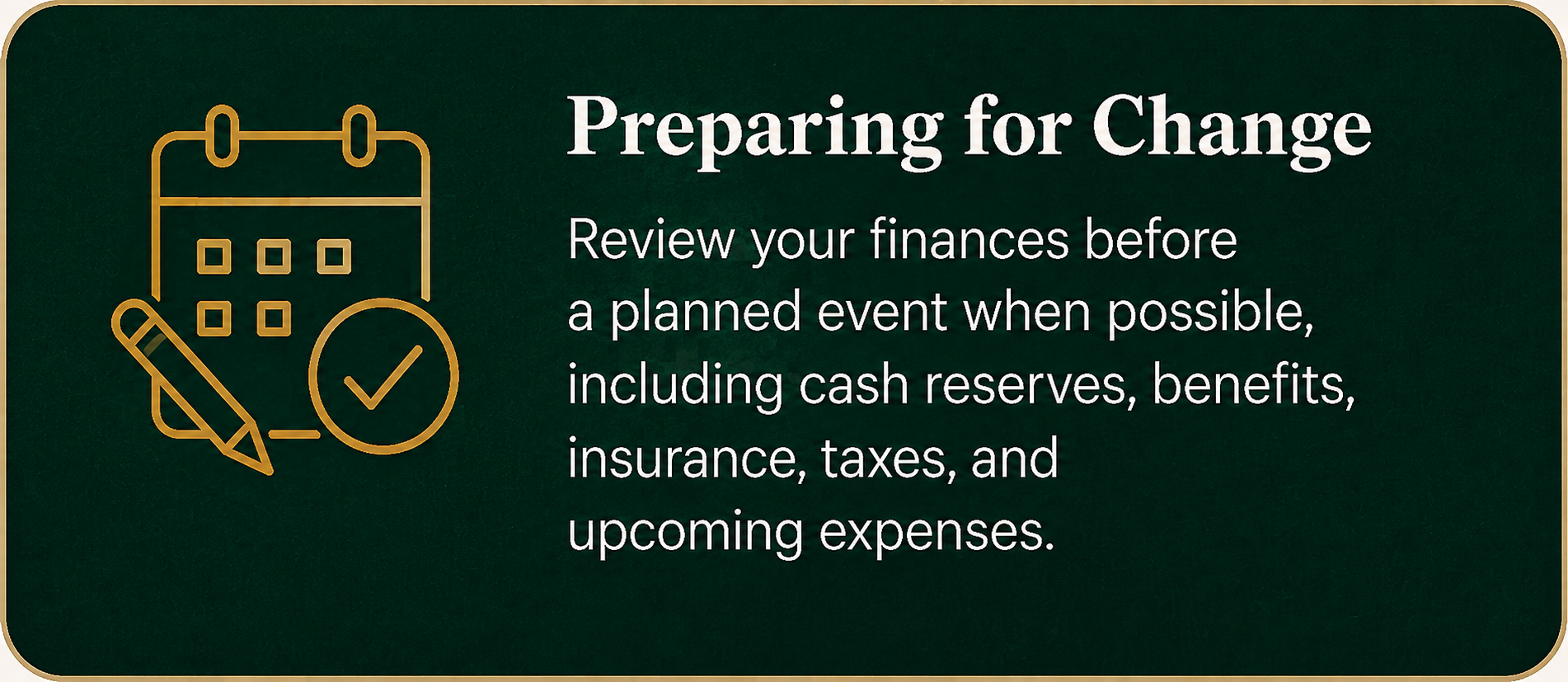
Navigating a Financial Transition

Life Events & Major Financial Transitions Guides
Resources for Life’s Changing Seasons
Major financial decisions often arise during periods that already feel busy or emotional. Our Life Events & Major Financial Transitions Series provides practical educational resources to help you understand what may require attention, prepare for important conversations, and move forward with greater financial confidence.
-
![]()
Empty Nest Planning
Explore how changing household expenses, family responsibilities, retirement priorities, and personal goals may shape your next chapter after children leave home.
-
![]()
What to Do When a Loved One Passes Away
Organize important financial and administrative steps that may help families navigate the difficult period following the death of a loved one.

When Life Changes, Start Here

Identify What Changed
Understand which parts of your income, household benefits, responsibilities, or goals are different

Handle Immediate Priorities
Address time-sensitive items such as benefits, accounts, insurance, bills, documents, and deadlines

Update Important Decisions
Review beneficiaries, retirement plans, insurance, taxes, estate documents, and savings strategies.

Revisit your Longer-Term Plan
Once the immediate transition is under control, adjust your financial goals and priorities for what comes next.
Life Events & Financial Transitions FAQs
-
Your plan should be reviewed as soon as reasonably possible after a meaningful change involving your family, employment, income, home, health, or responsibilities. Some urgent items may require immediate attention, while broader planning decisions can be addressed gradually.
-
Common areas include your budget, financial goals, accounts, insurance coverage, beneficiaries, workplace benefits, estate documents, taxes, and plans for future expenses.
-
Before leaving a position, review your new compensation, healthcare coverage, retirement-plan options, unused benefits, insurance needs, emergency savings, and the treatment of your existing workplace retirement account.
-
This transition may change household spending, education support, savings capacity, insurance needs, and retirement priorities. It can be a valuable time to revisit both your finances and your goals for the next stage of life.
-
Updates may be needed for accounts, beneficiaries, insurance policies, estate documents, tax withholding, retirement plans, household cash flow, and both short- and long-term financial goals.
-
Immediate priorities may include locating important documents, contacting appropriate professionals, reviewing recurring expenses, notifying relevant institutions, understanding available benefits, and organizing the deceased person’s accounts and obligations.
-
No. Major transitions often create several overlapping questions. An initial conversation can help clarify which areas may need immediate attention and which can be addressed over time.