
Business Planning For Owners & Entrepreneurs
Your Business Is Part of Your Financial Future
Owning a business creates financial opportunities, but it also brings responsibilities that extend far beyond daily operations. Decisions involving retirement, taxes, employees, succession, and business protection can affect both the future of your company and your personal financial plans.
At The Snook Group, we help business owners look at the full picture. By understanding where your business is today and where you want it to go, we can help you identify important planning considerations and develop strategies that support your company, your employees, and your long-term goals.
What We Emphasize in Our Approach
Some business planning focuses only on the numbers.
We believe true planning goes beyond that.
At The Snook Group, we take a coordinated approach—connecting your business, your personal finances, and your long-term goals into one clear strategy. This allows you to make more confident decisions, avoid gaps in planning, and move forward with purpose.
Our goal isn’t just to help your business succeed—it’s to help you create a life where your success actually gives you the freedom to enjoy it.
Important Areas of Business Owner Planning

Your Business and Personal Finances Work Together
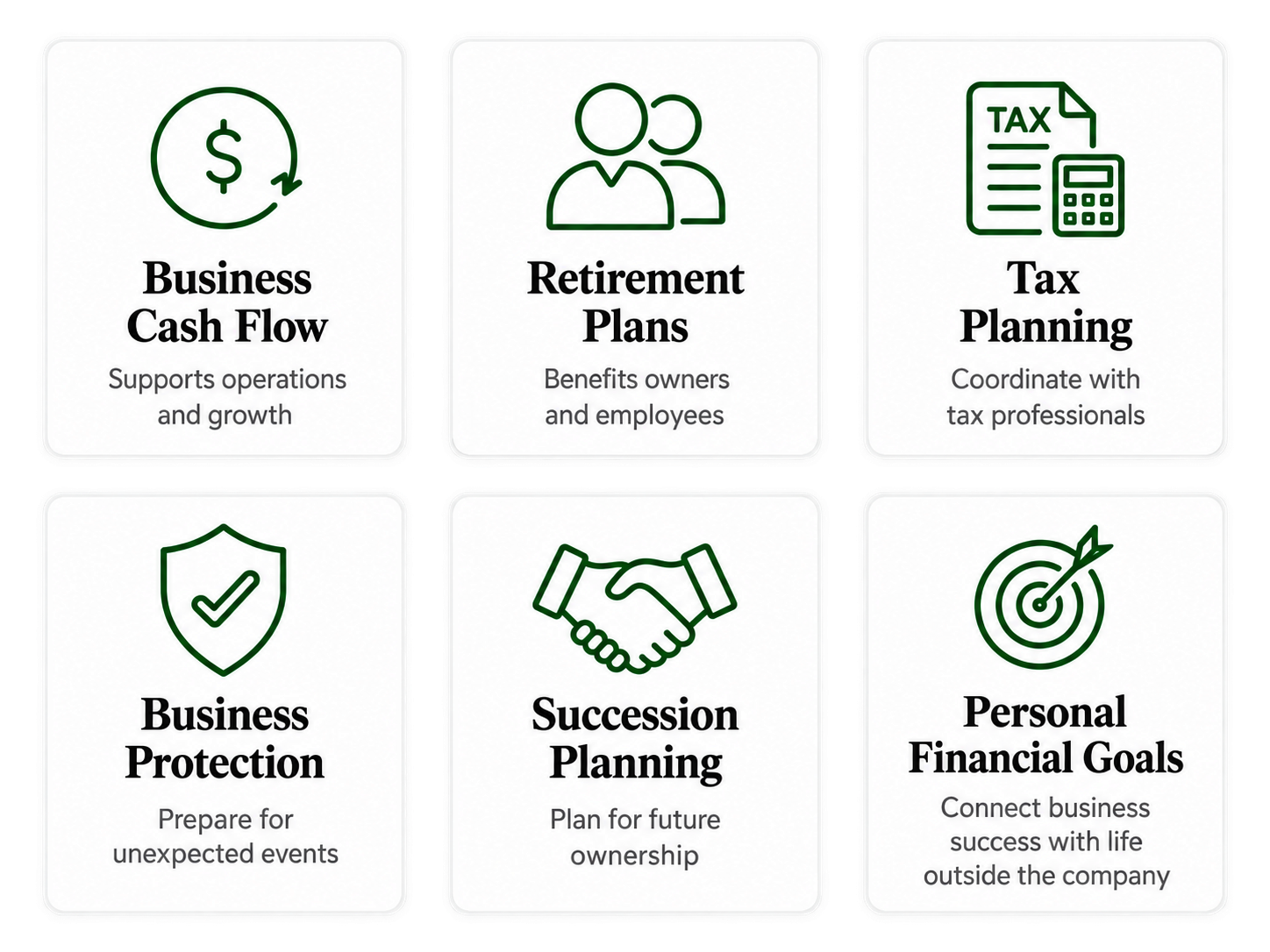
For many owners, the business connected to income, retirement, family wealth, taxes, employees, and long-term financial security. Looking at these areas together can help create a more coordinated strategy.
Where Are You in Your Business Journey?

Planning Resources for Business Owners
Important business decisions often begin with knowing which questions to ask. Our Business Owner Planning Series provides educational resources to help you better understand common planning topics and prepare for more productive conversations about the future of your company.
-
![]()
Work/Life Balance
Helping business owners create financial clarity and operational efficiency so they can spend more time with family, pursue personal goals, and enjoy the success they’ve built.
-
![]()
Business Financial Planning
Comprehensive strategies aligning personal and business financial goals. Let us talk you through the available options.
-
![]()
Retirement and Exit Planning
Preparing for a successful transition from business ownership.
-
![]()
Succession Planning
Ensuring continuity through family, partner, or third-party transitions.
-
![]()
Risk Management & Business Protection
Safeguarding your business against unexpected events
-
![]()
Tax-Efficient Strategies
Collaborating with your tax professionals to enhance efficiency.
-
![]()
Cash Flow & Business Growth
Improving financial stability and supporting sustainable growth.
-
![]()
Key Person Protection
Protecting your business from the loss of essential team members.








Before You Transition Your Business


Know What the Business Mean to Your Future
Understand how business value and future income may fit into your personal retirement strategy

Identify Who Comes Next
Consider family members, partners, employees, or an outside buyer and how ownership may eventually transfer.

Coordinate the Financial Details
Review taxes, business valuation, retirement plans, insurance, estate consideration, and potential transaction structure.
Coordinate the Financial Details
Review taxes, business valuation, retirement plans, insurance, estate consideration, and potential transaction structure.
Frequently Asked Questions
-
Succession planning is most effective when it begins well before an owner expects to leave. Starting early provides more time to evaluate possible successors, address ownership and valuation considerations, and coordinate the transition with personal retirement and estate goals.
-
For many owners, the business may represent a significant portion of their income, assets, and future retirement resources. A coordinated plan considers how business income, retirement accounts, the potential value of the company, and the timing of an eventual transition may work together.
-
The answer may depend on your company’s size, number of employees, cash flow, contribution goals, and administrative preferences. Reviewing these factors can help narrow the options and identify which plan structures deserve further consideration.
-
The loss of someone essential to the company can affect revenue, client relationships, operations, and future ownership. Business-protection planning can help identify these risks and consider strategies for maintaining stability during an unexpected event.
-
Yes. Business planning often involves financial, tax, legal, and operational considerations. When appropriate, your financial professional can coordinate with your qualified tax and legal advisors so that each part of the strategy is considered together.
Prepare Your Business for What Comes Next
Whether you are growing your company, strengthening employee benefits, preparing for retirement, or beginning to think about succession, thoughtful planning can help you make more informed decisions for yourself and the people who depend on your business.