

Family Protection & Legacy Planning

Protecting the People You Love
It is also about protecting the people who depend on you, organizing important information, and preparing for situations your family may one day need to navigate.

Creating a Plan for the Future
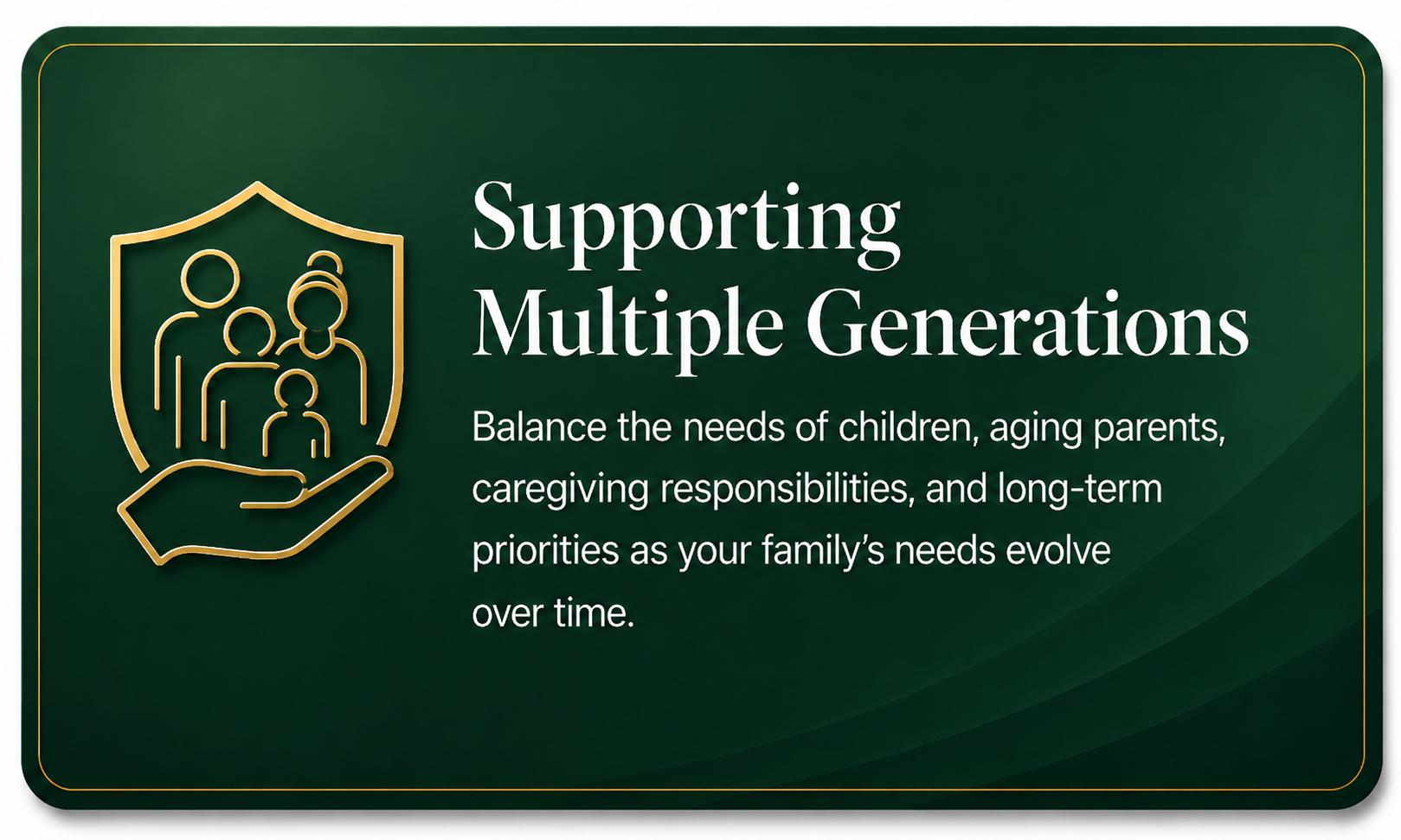
As life changes, your priorities may shift from protecting income and raising a family to caring for aging parents, reviewing beneficiaries, organizing estate documents, and communicating your wishes.
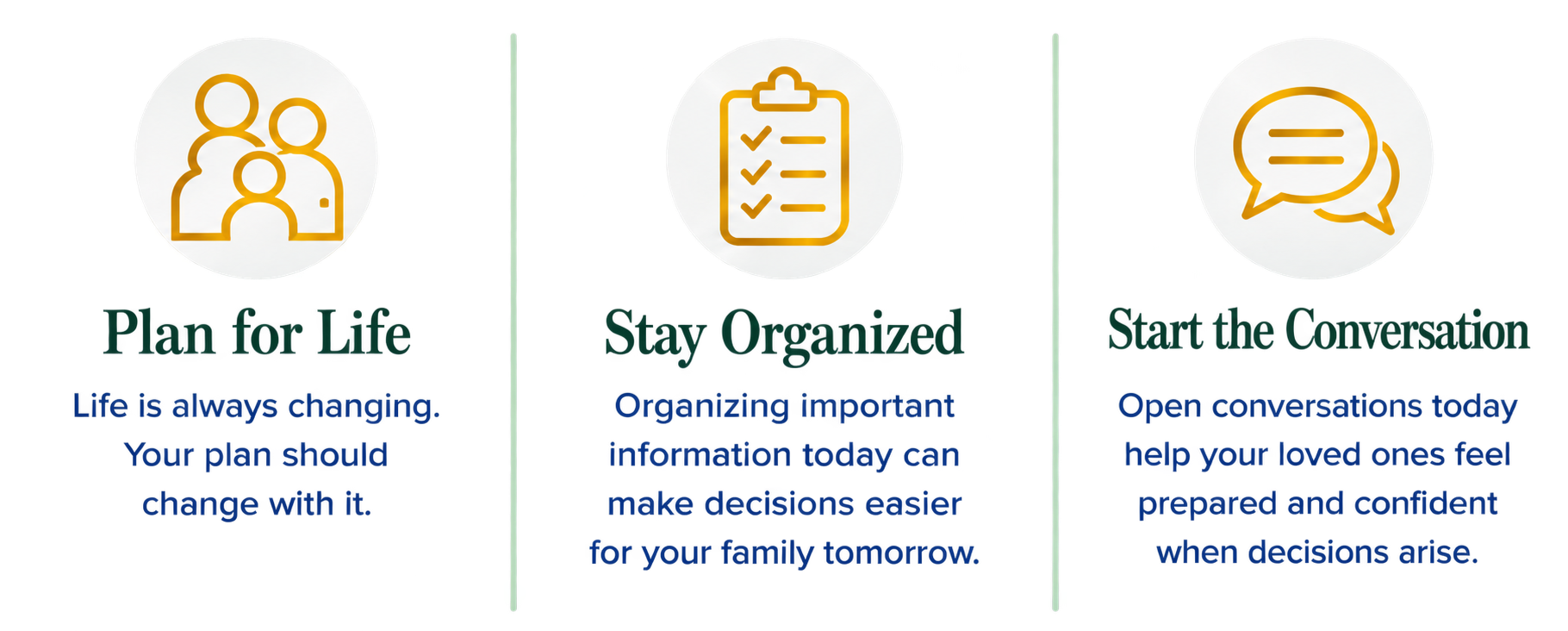
Thoughtful planning today can help protect your family, support the people you love, and provide peace of mind for the future.
Important Areas of Family Protection & Legacy Planning

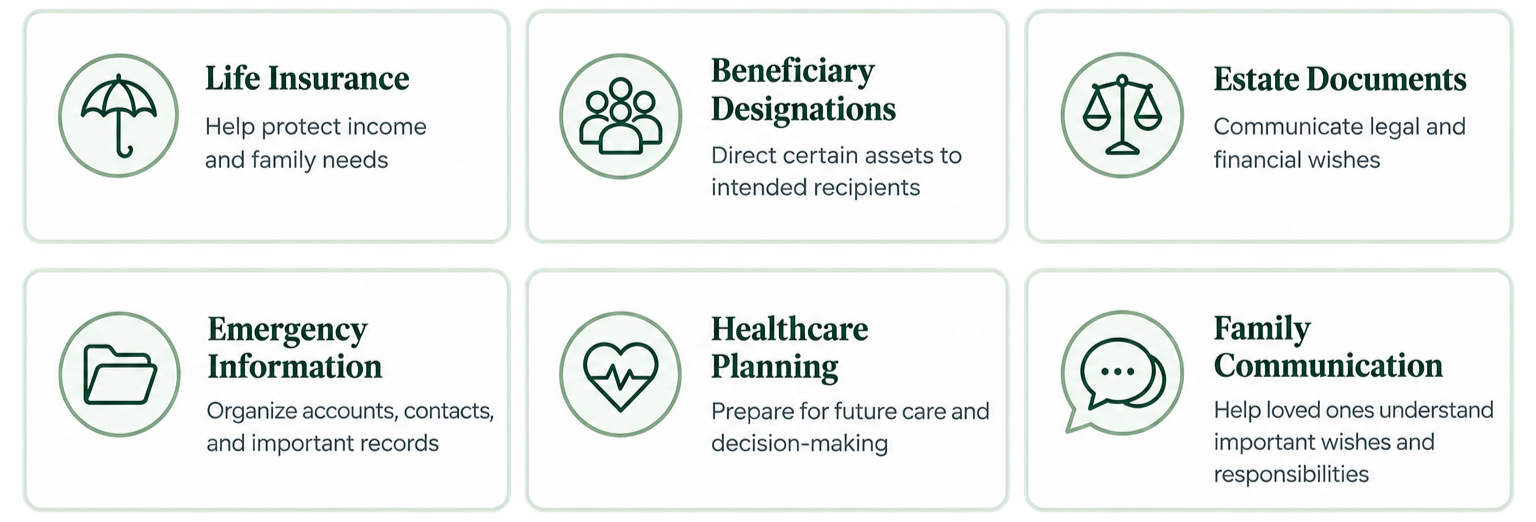
Your Family Protection Plan Has Several Pieces
Family and legacy planning often involves several areas working together. Reviewing them as part of a larger plan can help reduce gaps and make future responsibilities clearer.
Planning Through Different Family Stages

Before Your Family Needs The Information


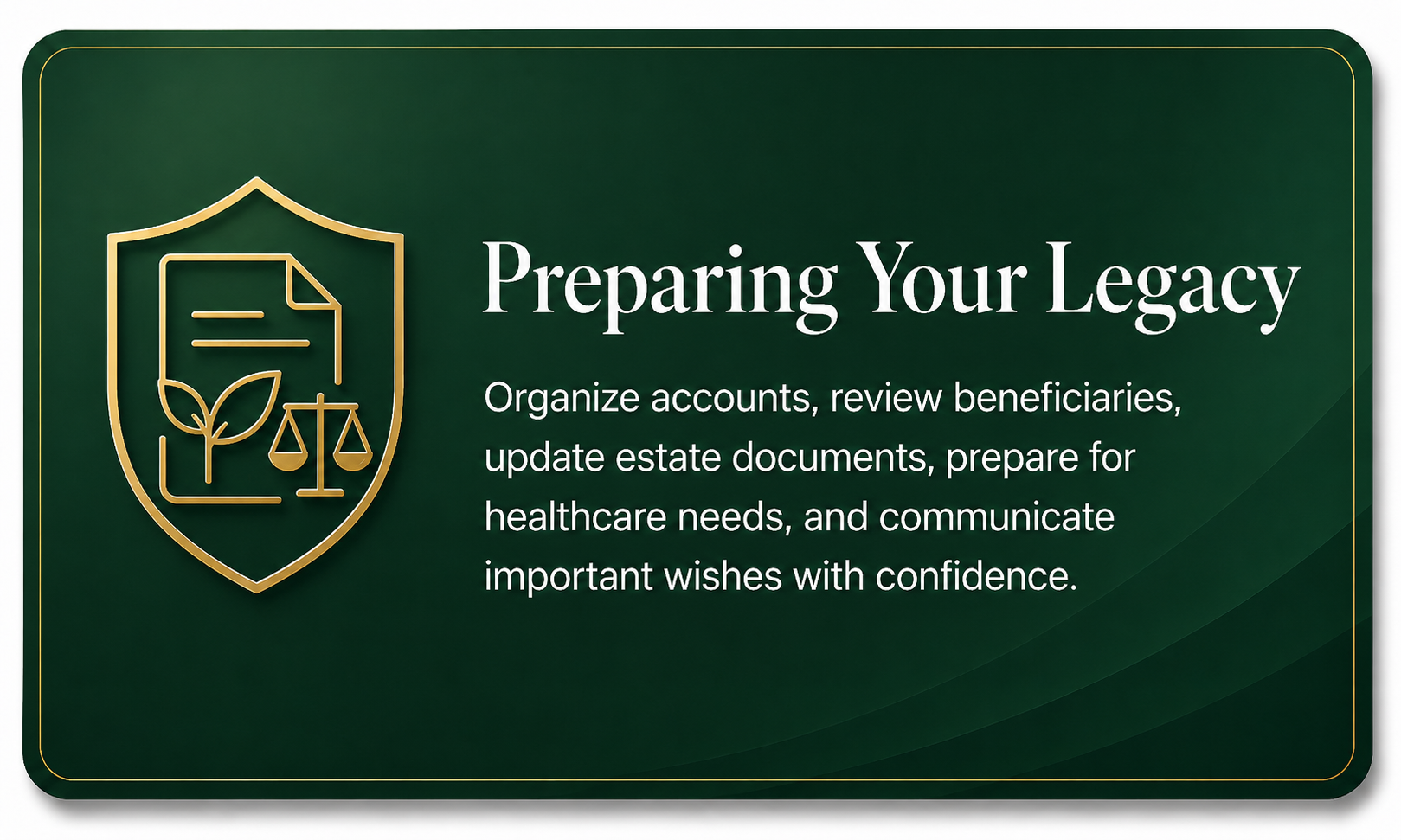
Review Your Beneficiaries
Make sure the people listed on retirement accounts, insurance policies, and other accounts still reflect your wishes.

Organize Important Documents
Gather estate documents, insurance information, accounts records, professional contacts, and other key information

Talk About Family Responsibilities
Discuss caregiving, healthcare preferences, financial responsibilities, and who may help if circumstances change.
Make Your Wishes Easier To Find
Help your family know where important information is kept and whom they should contact if something happens.
Family & Legacy Planning Guides
-
![]()
Family Protection
Review important considerations involving life insurance, income protection, family responsibilities, and preparing for unexpected events.
-
![]()
Beneficiary Awareness
Learn why beneficiary designations matter, when they should be reviewed, and how outdated or incomplete selections may affect your plans.
-
![]()
Estate Planning Basics
Explore the purpose of common estate-planning documents and the importance of coordinating your legal and financial arrangements.
-
![]()
Caring for Aging Parents
Prepare for conversations involving caregiving, housing, healthcare, finances, important documents, and changing family responsibilities.
-
![]()
What to Do When a Loved One Passes
Review practical financial and organizational steps that may help families during the difficult period following the loss of a loved one.
Family & Legacy Planning FAQs
-
Insurance may help provide liquidity and financial support, while estate planning addresses how assets and responsibilities should be managed or transferred. Coordinating the two can help reduce gaps and conflicting instructions.
-
These conversations are often most productive before a crisis occurs. Starting early allows families to discuss preferences, gather important documents, identify available resources, and clarify who may help with different responsibilities.
-
Useful information may include account records, insurance policies, beneficiary details, estate documents, professional contacts, recurring obligations, digital-account instructions, and your preferences for important personal matters.
-
Yes. Family and legacy planning may involve financial, legal, and tax considerations. We can work alongside your qualified professionals when appropriate to help support a more coordinated planning process.
-
Beneficiaries should be reviewed periodically and after meaningful life events such as marriage, divorce, the birth of a child, the death of a family member, or a major change in your financial circumstances.
-
Description text goes hereCertain accounts and insurance policies transfer according to the beneficiary listed on the account. Those instructions may take priority over provisions in a will, making accurate and current designations an important part of your broader plan.
-
Estate planning is not only about the size of an estate. It can help communicate your wishes, identify who should make decisions if you cannot, organize the transfer of assets, and make responsibilities clearer for your family.
-
Insurance may help provide liquidity and financial support, while estate planning addresses how assets and responsibilities should be managed or transferred. Coordinating the two can help reduce gaps and conflicting instructions.